Every roulette player eventually hears about a system that promises to tilt the odds. Martingale, Fibonacci, D’Alembert, and half a dozen others get passed around casino floors and forums like secret handshakes. None of them change the house edge, and none of them can guarantee a win. What they do change is how your bankroll moves during a session, how fast your bets grow, and how much control you keep over your losses. This guide walks through every major roulette betting system, shows you exactly how each one plays out with real numbers, and helps you figure out which one, if any, actually fits the way you play.
How roulette betting systems actually work
Roulette betting systems fall into two broad camps. A progression system changes your bet size depending on whether your last spin won or lost. A coverage system keeps your bet flat but spreads your money across more numbers on the table at once, so you win more often even though each win pays less.
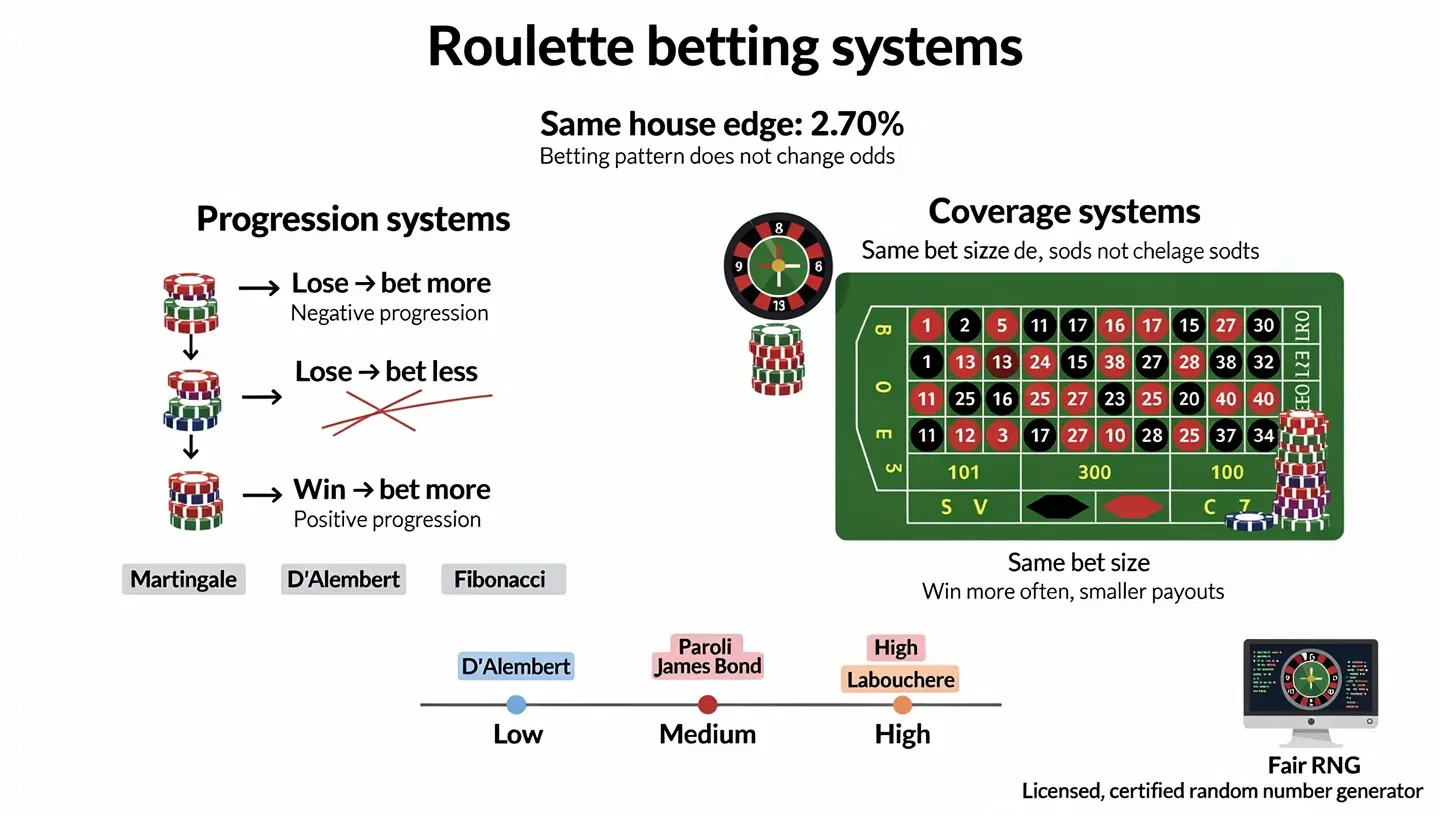
Progression systems split further into two directions. A negative progression increases your bet after a loss, trying to recover what you already put in. Martingale, D’Alembert, and Fibonacci all work this way. A positive progression does the opposite, increasing your bet after a win to make the most of a hot streak, which is how Paroli operates. Neither direction touches the actual odds of the wheel. On a European wheel the house edge sits at 2.70 percent no matter what pattern you follow with your chip stack, and doubling, halving, or holding your bet steady does not move that number by a fraction. Independent references such as Wizard of Odds lay out the exact math behind that figure for anyone who wants to check it spin by spin.
| System | Progression type | Risk level |
|---|---|---|
| Martingale | Negative | High |
| Paroli (Reverse Martingale) | Positive | Medium |
| D’Alembert | Negative | Low to medium |
| Fibonacci | Negative | Medium |
| Labouchere | Negative | Medium to high |
| James Bond | Flat / coverage | Medium |
Testing any of these online means the outcome only means what it says if the wheel itself is fair. A properly licensed platform, one running under a Curaçao gambling license, uses a certified random number generator, so the results you get while running a system match the true odds rather than something skewed behind the scenes.
Progressive and non-progressive roulette systems
A progressive system means you increase or decrease your bet with each round based on the last result. This can work in your favor during a streak, but it also means your bankroll has to be able to handle a run of bad luck without buckling. Martingale and Fibonacci are the two most common progressive systems you will run into.
A non-progressive system, often called flat betting, means you wager the same amount every single spin regardless of what happened before. It sounds almost too simple to count as a strategy, but plenty of experienced players treat it as the smartest baseline available. Flat betting never spirals, never chases a losing streak into dangerous territory, and makes it easy to know exactly how much a session is going to cost you at the outset.
The Martingale system
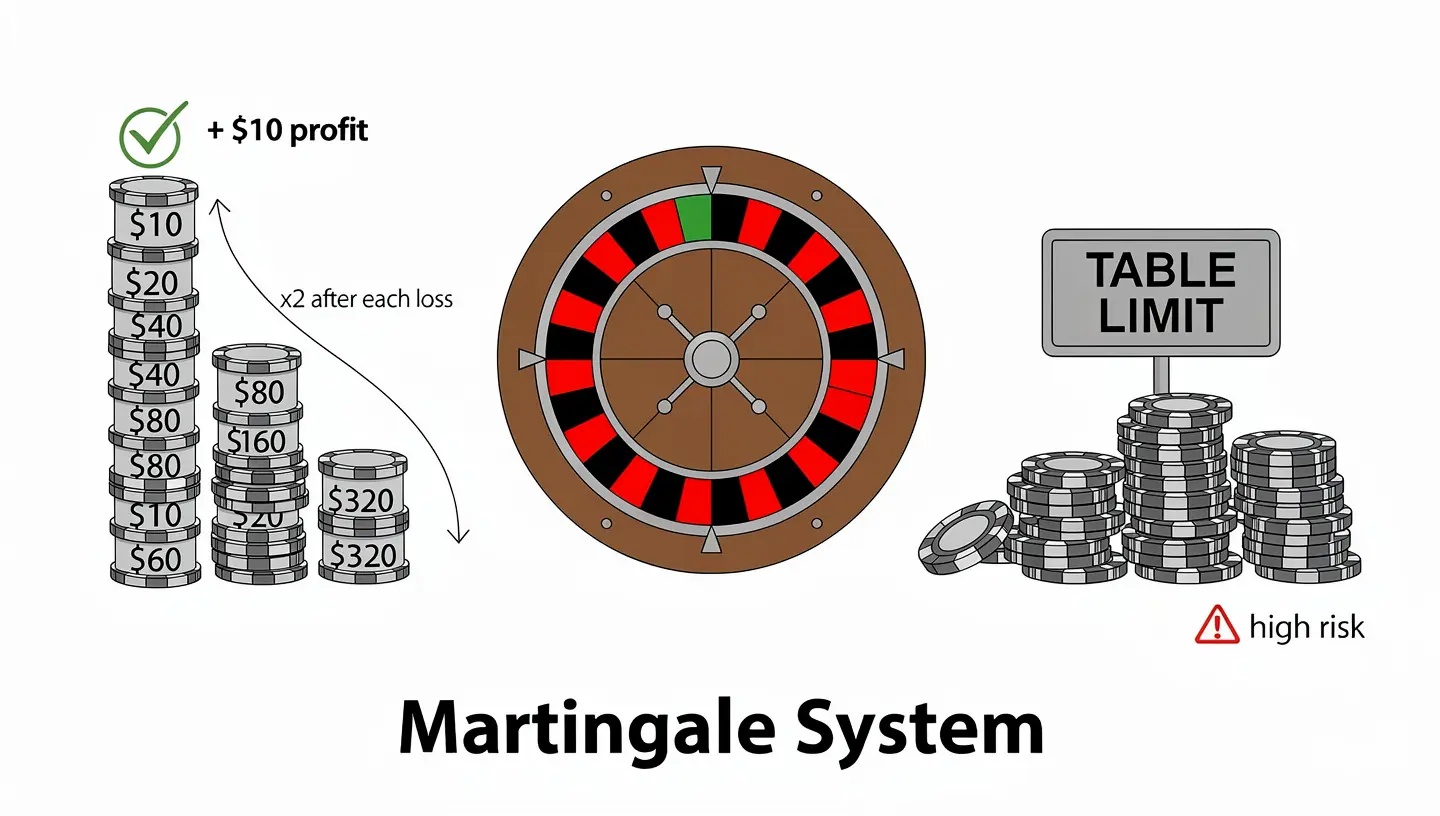
The Martingale system is the most famous roulette betting system in existence, and probably the one every new player hears about first. The idea is simple. You place an even-money bet, red or black, odd or even, high or low, and if you lose, you double your next bet. You keep doubling after every loss until you finally win, at which point you have recovered every previous loss plus one unit of profit, and you drop back down to your starting bet.
How the Martingale works
Say you start with a $10 bet on red. If it loses, your next bet is $20. Lose that too, and you move to $40, then $80, then $160. The moment red finally hits, you collect enough to cover every prior loss and walk away with $10 more than you started with. That is the appeal, and it is also the trap.
| Bet number | Amount | Result |
|---|---|---|
| 1 | $10 | Lost |
| 2 | $20 | Lost |
| 3 | $40 | Lost |
| 4 | $80 | Lost |
| 5 | $160 | Lost |
| 6 | $320 | Won |
After six straight losses starting at $10, that sixth bet alone runs $320, and the total wagered across the sequence is well over $600 just to net a $10 profit. Most tables carry a maximum bet, and a long enough losing streak will hit that ceiling before a win ever arrives, at which point the system simply stops working and the loss becomes permanent.
Some players like to run Martingale using free spins or a matched deposit from a bonus type that allows table games, since testing the doubling pattern with bonus funds keeps the real bankroll untouched while you get a feel for how fast the bets escalate.
Martingale pros and cons
The system is easy to learn, requires no math beyond doubling, and produces frequent small wins during a normal session. The downside is the exponential growth of the bet size. A short losing streak can put you deep into the hundreds or thousands within a handful of spins, and no amount of discipline changes the underlying probability of the next spin.
Best for: players with a large bankroll relative to their base bet who plan short sessions and want frequent small profits rather than one big payout.
The Reverse Martingale, also called Paroli
The Paroli system, sometimes called the Reverse Martingale, flips the whole idea on its head. Instead of doubling after a loss, you double after a win. The goal is to ride a hot streak while keeping your losses small during the cold ones.
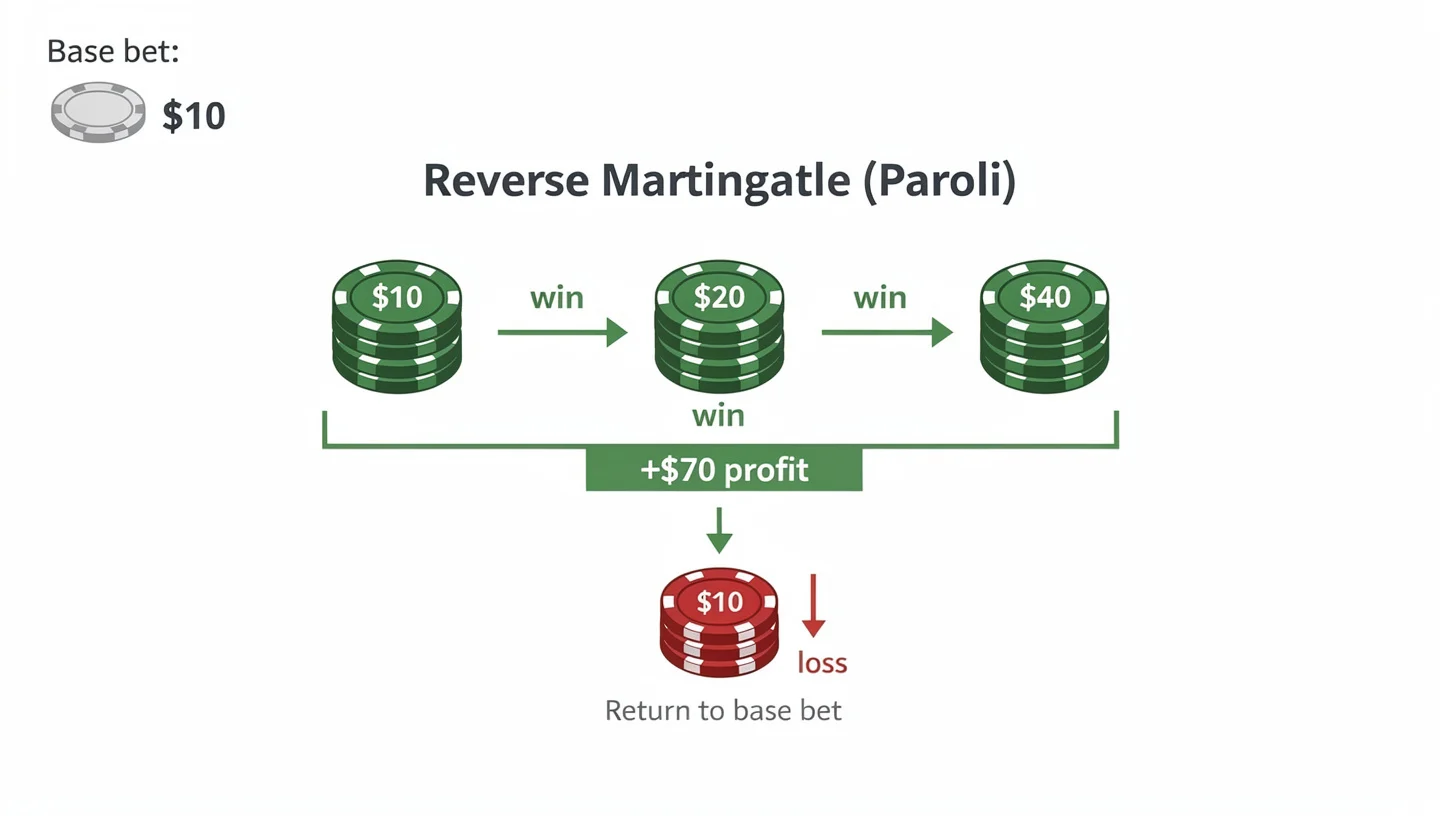
Set a base bet, say $10, and stick with it until you win. After that first win, double to $20. Win again, double to $40. Most players cap the run at three consecutive wins, then bank the profit and drop back to $10. Lose at any point in the sequence and you simply return to the base bet rather than digging deeper.
Here is how a winning run looks: bet $10 and win, bet $20 and win, bet $40 and win, then reset. That sequence nets $70 in profit across three spins. Lose on the very first bet instead, and you are down only $10, nowhere near the exposure a losing Martingale run creates.
Best for: players who want to protect their bankroll and are comfortable needing a genuine winning streak before seeing meaningful profit.
The D’Alembert system
The D’Alembert system takes a gentler route than either Martingale or Paroli. After a loss, you raise your bet by a single unit. After a win, you lower it by a single unit. If your base unit is $10, a loss takes you to $11, and a win brings you back down to $9 or wherever the count lands.
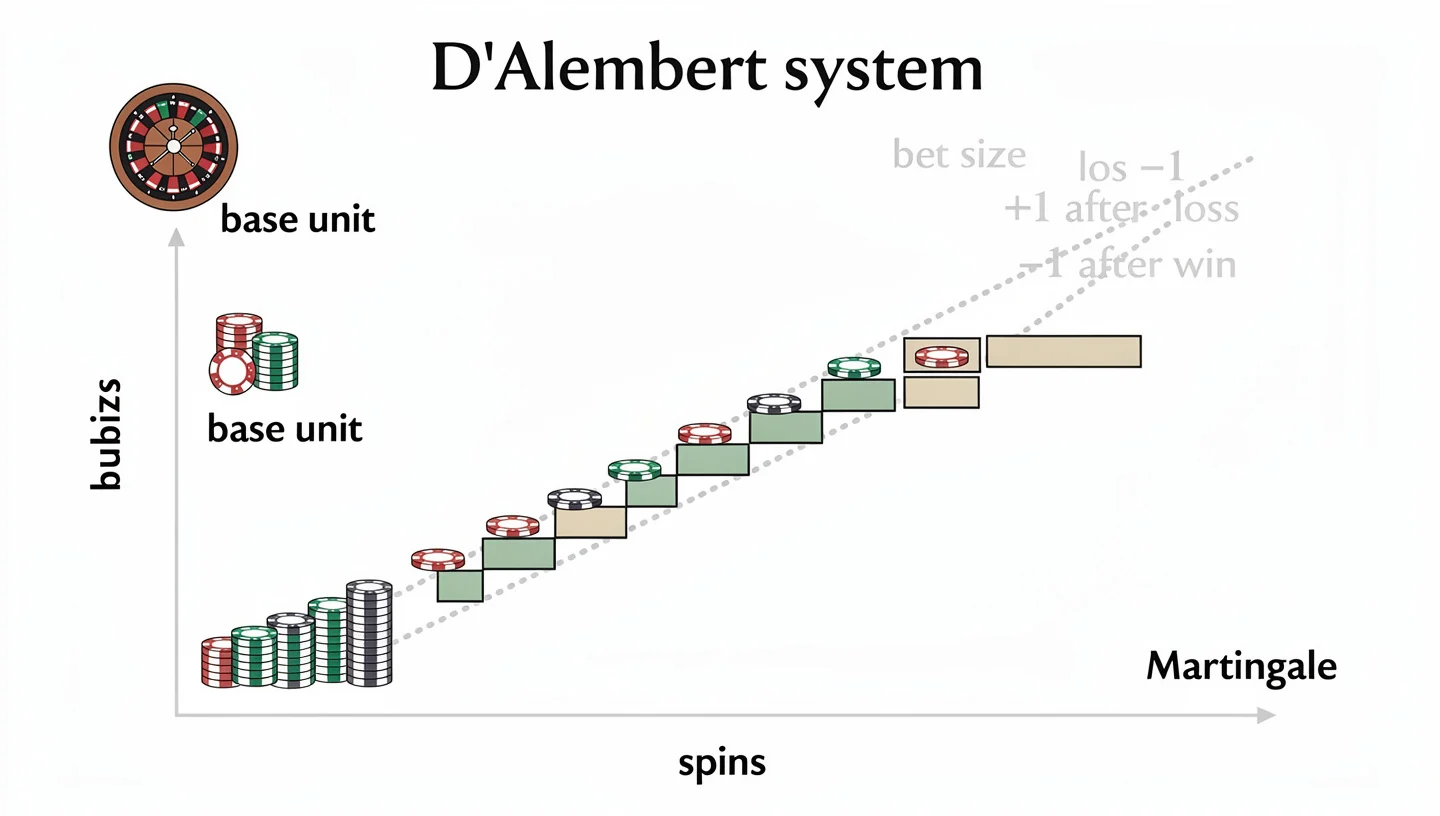
The logic behind it rests on the idea that wins and losses even out over a long enough session, so betting slightly more while behind and slightly less while ahead should balance the books. The progression is far flatter than Martingale, which means your bankroll survives a losing run much longer, but recovering from a deep hole also takes many more winning spins to climb back out.
Best for: conservative players who want a longer session with smaller swings rather than a shot at a fast recovery.
The Fibonacci system
The Fibonacci system borrows its structure from the mathematical sequence where each number is the sum of the two before it: 1, 1, 2, 3, 5, 8, 13, 21, and onward. In roulette, these numbers become your bet size in units.
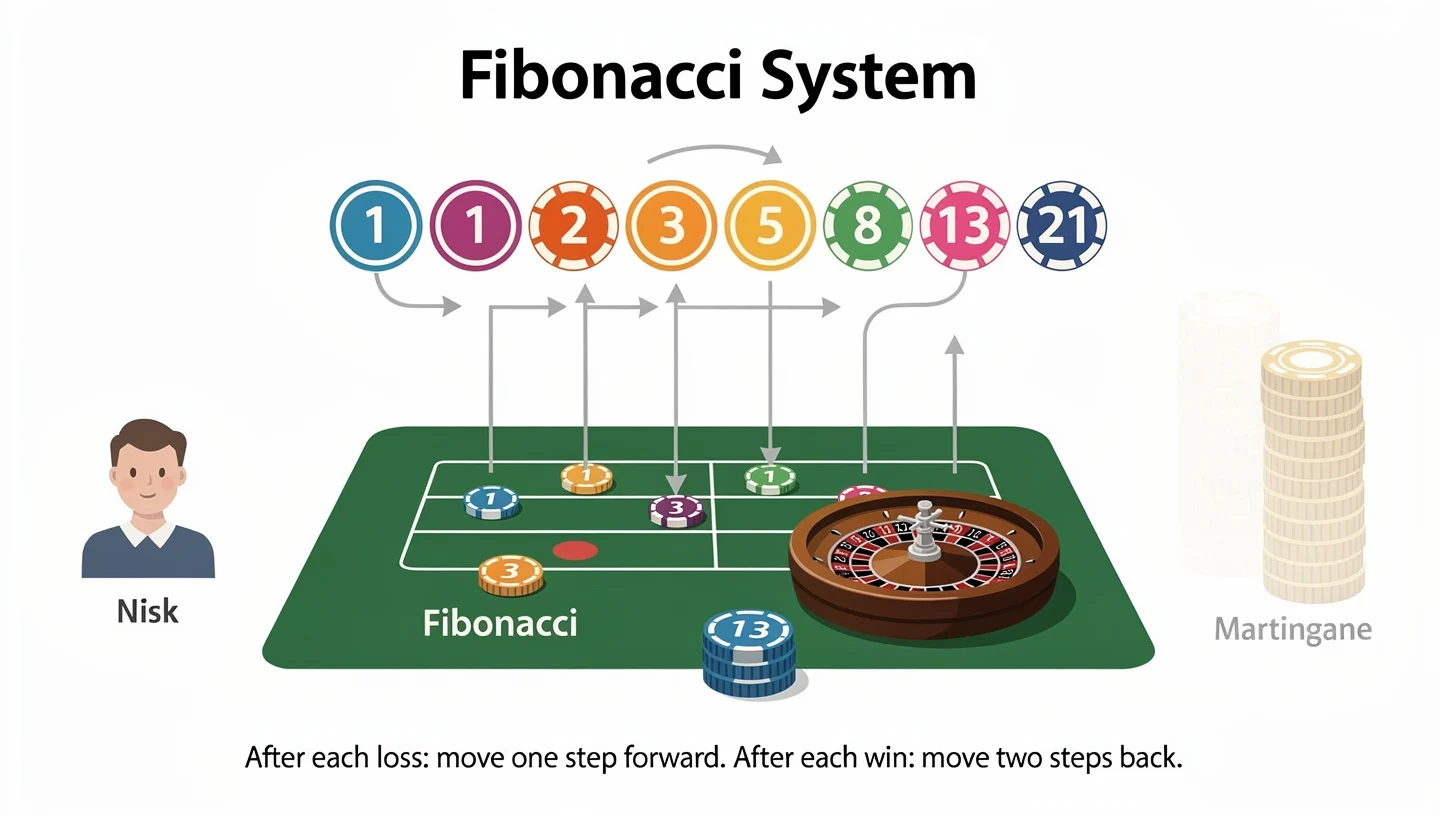
Start at the beginning of the sequence. After every loss, move one step forward. After a win, move two steps back. The target is to work your way back to the start of the sequence, at which point the session sits in profit. Compared with Martingale, the climb is much slower. After seven straight losses, a Martingale player working from a $10 base is staring at a $1,280 bet, while a Fibonacci player at the same point is only up to $210, which is a meaningful difference when a losing streak drags on.
Best for: players who like the structure of a progressive system but find Martingale too aggressive for their comfort.
The Labouchere system
Also known as the cancellation system, the Labouchere system hands you more control over your target profit than any of the systems above. You start by writing down a short sequence of numbers, something like 1-2-3-4-5. The sum of that whole line, 15 in this case, becomes your target profit for the session.
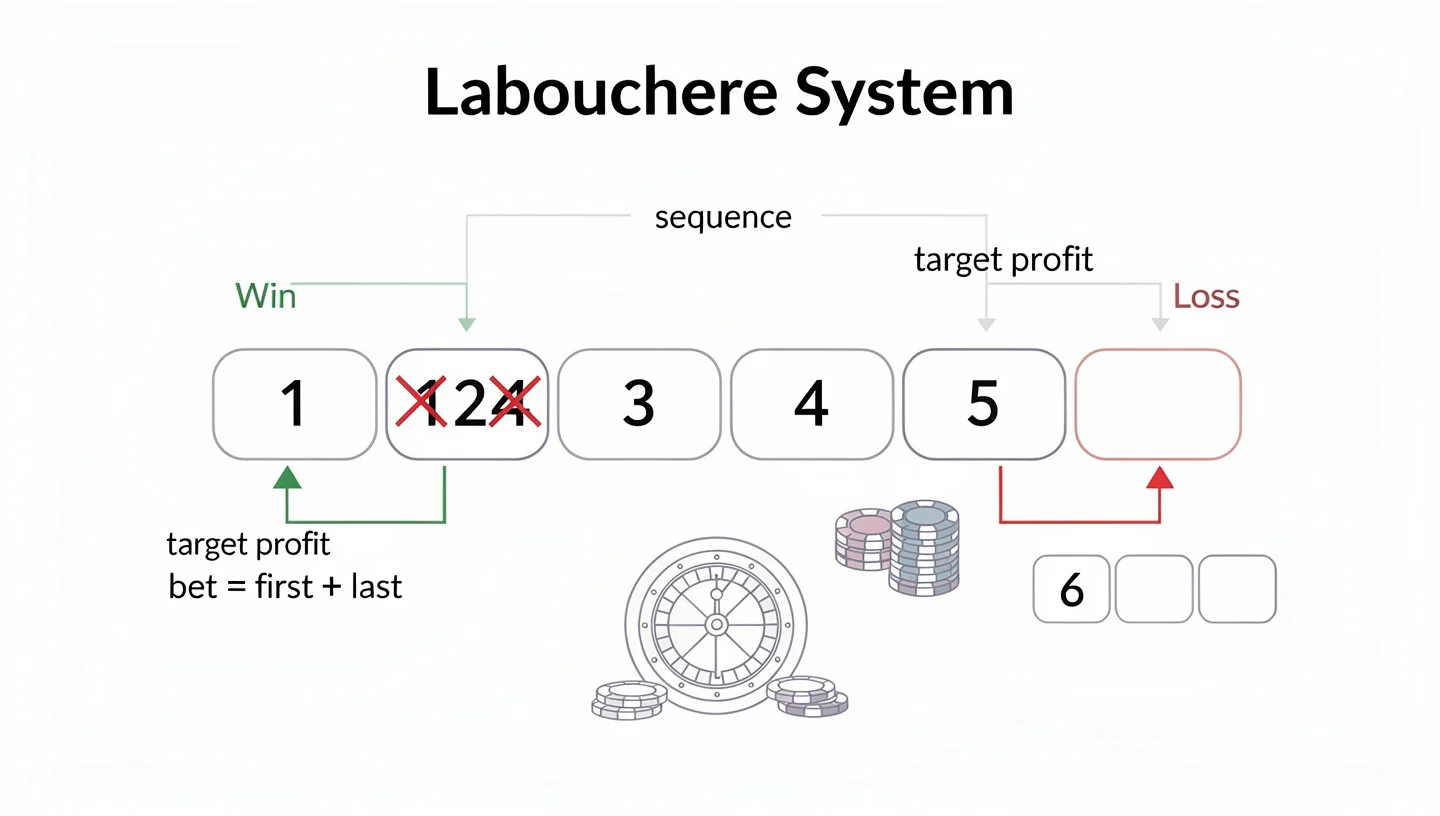
Each bet equals the first number in the line plus the last number. Using the sequence above, your opening bet is 1 plus 5, or $6. Win that bet and you cross off both the 1 and the 5, leaving 2-3-4 on the line. Lose it and you add $6 to the end of the sequence instead, making it 1-2-3-4-5-6. You keep going until every number on the line has been crossed off, at which point you have banked your original target profit in full.
The customization is the whole appeal. A flat sequence like 3-3-3-3-3 grows far more slowly than something steep like 1-3-5-7-9, so you can shape how aggressive the system feels before you even sit down. The tradeoff is complexity. Tracking a growing line of numbers mid-session, especially at a faster online table, takes more focus than simply doubling a bet.
Best for: players who enjoy planning ahead and want a specific profit target rather than an open-ended session.
The James Bond system
The James Bond system takes a completely different shape from everything above, since it does not adjust your bet at all. Instead it spreads a single flat wager across a large portion of the table on every spin, so you cover far more numbers than a single even-money bet ever could.
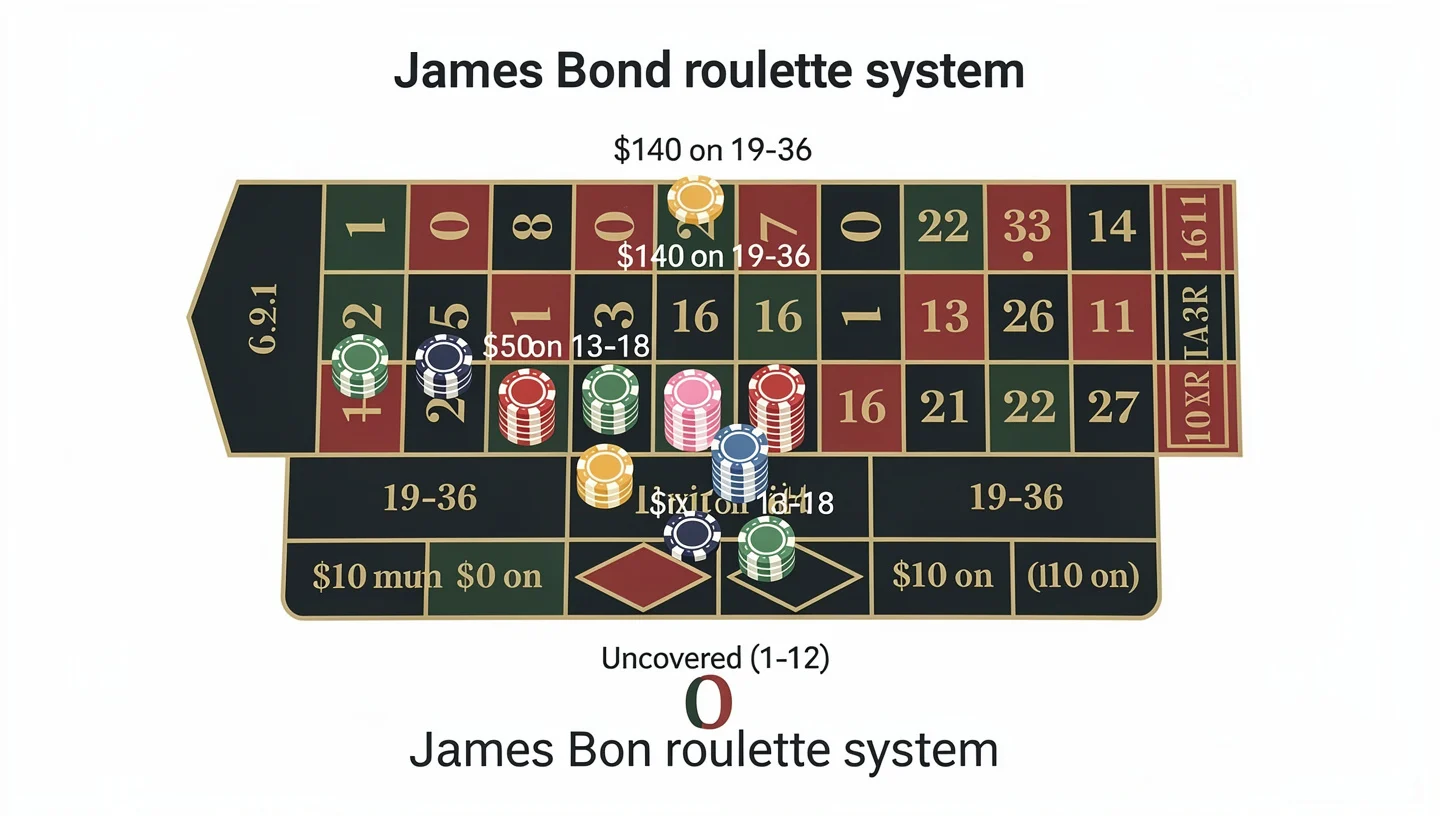
Using a total stake of $200, a typical split looks like $140 on the high numbers from 19 to 36, $50 on the six line covering 13 to 18, and $10 on zero as a small insurance bet. That combination covers 25 of the numbers on the wheel in one go. You only walk away empty-handed if the ball lands anywhere from 1 to 12, which happens on roughly a third of spins.
Best for: players who want frequent action and enjoy covering a wide stretch of the table rather than betting on a single color or number.
Other roulette systems worth knowing
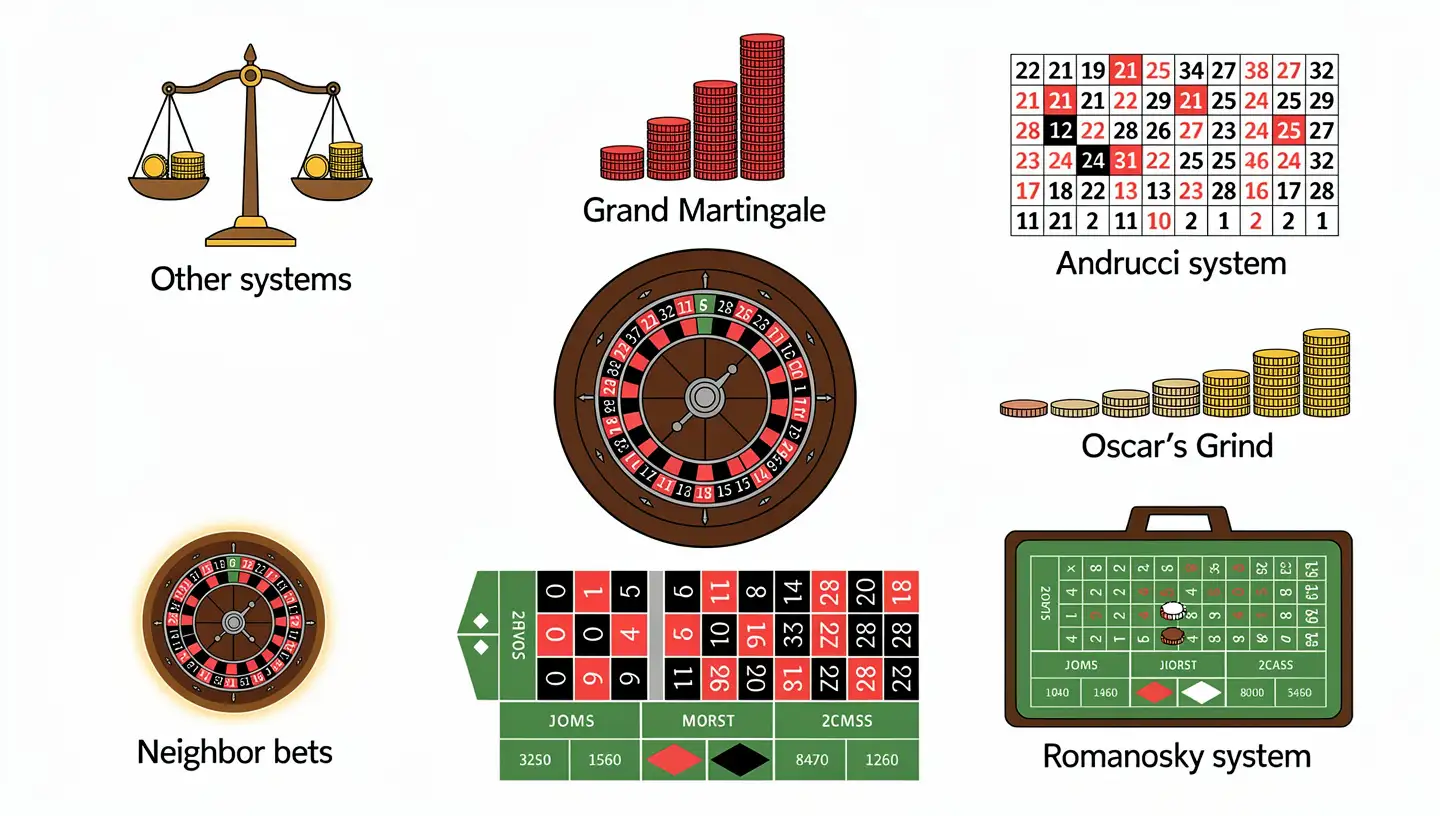
Beyond the six systems above, a handful of less common approaches show up often enough that they deserve a mention, even if they are not the first thing most players reach for.
- Grand Martingale: the standard Martingale with one extra unit added to every doubled bet, which speeds up profit but also pushes bet sizes higher even faster during a losing run.
- Andrucci system: instead of following math, this one asks you to watch roughly 30 spins, note which numbers hit most, and then bet straight up on those numbers going forward. There is no evidence this improves your odds, since each spin remains independent of the last.
- Oscar’s Grind: a slower cousin of D’Alembert where you only raise your bet by one unit after a win, not a loss, aiming to grind out a single unit of profit per cycle rather than chase big swings.
- Romanosky system: built for European roulette only, this one covers all but four of the non-zero numbers using a mix of column, dozen, and corner bets, though it needs a long run of wins to turn a real profit.
- Neighbor bets: rather than a full progression, this approach targets one number on the wheel along with the pockets sitting on either side of it, giving broader coverage of a specific stretch of the wheel rather than the whole table.
None of these smaller systems escape the same math that governs every other approach on this page. Betting patterns like these, and games with a similar coverage logic such as sic bo strategy, all shift how your session feels without ever touching the underlying edge built into the game.
How to choose the right system for your bankroll
The right system for you depends far more on your bankroll and your tolerance for risk than on any claim about which one performs best on paper. A player with $2,000 to spend on a session can absorb a rough Martingale run that would wipe out someone playing with $200 in a matter of minutes.
Start by deciding your session goals. If you want a shot at a fast, satisfying win and can stomach the occasional big loss, Martingale or James Bond fit that mold. If you would rather stretch a smaller bankroll across a longer session with gentler swings, D’Alembert or flat betting make more sense. Fibonacci and Paroli sit somewhere in between, offering some structure without the extremes on either end.
Set your win and loss limits before you ever place a bet, not after a few rounds have already gone your way or against you. A common approach is to walk away once you have lost half your session bankroll, or once you have doubled it. Whatever numbers you pick, treat them as fixed rather than flexible once the session starts. Reading through general responsible gambling limits before you sit down is a smart habit no matter which system you end up trying, and support groups such as BeGambleAware are worth knowing about if a session ever stops feeling like entertainment.
Common mistakes and myths about roulette betting systems
Myth: a good system lowers the house edge. It does not. The house edge is fixed by the wheel itself, 2.70 percent on a single-zero wheel and 5.26 percent on a double-zero wheel, and no staking pattern changes that number by even a fraction.
Myth: hot and cold numbers are worth chasing. Each spin is completely independent of the one before it. A number that has hit five times in a row is no more or less likely to hit again on the next spin than any other number on the wheel. This misconception is often called the gambler’s fallacy, and it is the single most common trap new players fall into.
Myth: a complicated system works better than a simple one. Complexity has nothing to do with results. A simple flat bet followed with discipline will outlast a poorly managed Labouchere sequence every time, since the math underneath both is identical.
The most common practical mistake is chasing losses outside of whatever system you are using, tossing in an extra bet out of frustration to try to get even faster. This almost always makes things worse. If your plan calls for a specific bet after a loss, stick to it, and if your loss limit has been hit, stop for the day. Choosing a properly licensed, reputable online casino also matters more than people give it credit for, since a fair, certified wheel is the only environment where any of these systems behave the way the math above describes.
Which roulette variant works best with a betting system
The system you choose matters less than the wheel you choose to play it on. European roulette carries a 2.70 percent house edge thanks to its single zero, while American roulette adds a second zero pocket and pushes that edge up to 5.26 percent, nearly double. French roulette matches the European wheel at 2.70 percent, but on tables offering La Partage, even-money bets drop all the way to 1.35 percent when zero hits. Read the separate article we wrote about roulette variants.
Running Martingale, D’Alembert, or any other progression on an American wheel means fighting a steeper hill from the very first spin, since the extra zero eats into your expected results before you have placed a single bet. Sticking to a European or French table stretches your bankroll noticeably further across the same number of spins, regardless of which system sits behind your bet sizing. If return to player percentage factors into where you choose to play, comparing sites through a guide on the best payout casino options is worth doing before picking a table.
Does any roulette betting system beat the house edge?
No. Every system on this page changes the shape of your session, how fast your bets grow, how often you win small amounts versus large ones, but none of them touch the fixed house edge built into the wheel. That edge stays exactly the same on every single spin no matter what staking pattern sits behind your bets.
What is the safest roulette betting system for beginners?
Flat betting is the simplest starting point, since you wager the same amount every spin and never risk a runaway progression. Once comfortable, D’Alembert is a natural next step, since it only moves your bet by one unit at a time in either direction.
How much bankroll do I need for the Martingale system?
A common guideline is to bring at least 30 to 50 times your base bet before starting a Martingale session. At a $10 base, that means a bankroll of $300 to $500 to survive a realistic losing streak without hitting a wall.
Can I combine two roulette betting systems?
Yes, some players mix approaches, switching between Paroli during a hot streak and D’Alembert during a cold one. Combining systems adds complexity without changing the math underneath either one, so it comes down to personal comfort rather than any real mathematical advantage.
What is the difference between Martingale and Paroli?
Martingale increases your bet after a loss, aiming to recover everything with a single win. Paroli does the opposite, increasing your bet after a win to build on a streak while keeping your losses capped at your base bet.
Is the Fibonacci system safer than Martingale?
It escalates more slowly, which means your bankroll survives longer during a losing run, but it is not risk free. A long enough losing streak can still push your bet size high enough to hit a table limit before a win arrives.
Do roulette betting systems work the same online and live?
Yes, the underlying math is identical whether you play a fast online wheel or a slower live dealer table. Online games tend to run more spins per hour, though, so a progression system reaches its riskier stages faster online than it would at a physical table.
What is the gambler’s fallacy in roulette?
It is the mistaken belief that past spins influence future ones, such as assuming black is “due” after red has hit several times in a row. Every spin is an independent event, and the wheel has no memory of what came before it.