Sic Bo betting strategy does not mean finding a trick that beats the house, since no such trick exists in a game built entirely on three dice and a fixed payout chart. What it actually means is picking the right bets for your bankroll, understanding which wagers quietly cost you the most, and managing your money so a session lasts exactly as long as you want it to rather than ending sooner than planned.
This guide ranks every major bet by risk, walks through real bankroll numbers, and clears up a few myths that trip up newer players at the table before they ever place a wager. By the end you should have a clear, honest picture of what a sensible sic bo betting strategy actually looks like in practice, rather than a list of tricks that sound clever but do not hold up under real scrutiny once you check the actual numbers behind them.
Does Any Sic Bo Betting Strategy Actually Work?
No betting system changes the underlying math behind Sic Bo. Each shake of the dice is a fresh, independent event, and the house edge on every bet is fixed the moment the payout chart is printed. Doubling your bet after a loss, switching sides after a win, or following any other progression pattern does not shift those numbers even slightly, regardless of how confident a particular system sounds when someone explains it to you.
What a genuine sic bo betting strategy actually consists of is choosing bets with a lower house edge more often, sizing your wagers sensibly, and knowing when to walk away, none of which requires predicting anything about the next roll. This distinction matters more than it might seem, since plenty of players confuse a well organized approach to betting with an actual mathematical edge, and the two are not remotely the same thing.
Low Risk Sic Bo Bets
Small and Big sit at the top of this category. A Small bet wins on a total between 4 and 10, and a Big bet wins on a total between 11 and 17, both paying even money with a house edge around 2.78 percent, among the lowest figures you will find at any casino game whatsoever. Odd and Even work the same way, splitting the table based on whether the total is an odd or even number rather than high or low, and carrying the same low edge. All four bets lose automatically on a triple, which is exactly why they sit this close to a coin flip, and why most experienced players return to them again and again regardless of what else they choose to bet on during a session.
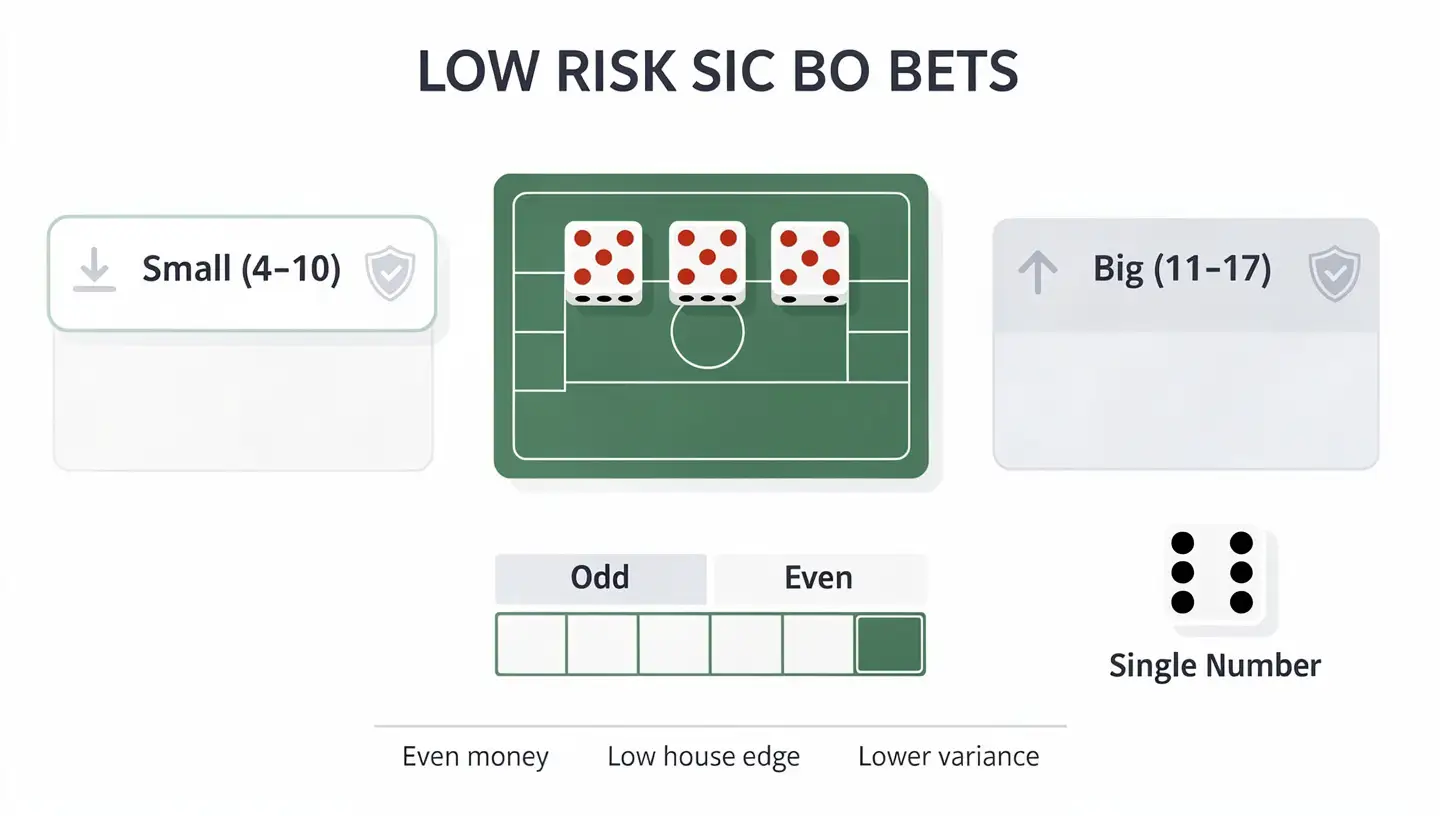
A single number bet also belongs in the low risk tier, even though it carries a slightly higher edge around 7.87 percent. You pick a number from 1 to 6 and win if it appears on any of the three dice, with the payout scaling up if it shows on two or all three of them at once. The appeal here is the accumulating payout on a fairly simple bet, which makes it a reasonable step up from Small and Big without jumping into anything genuinely risky, and it gives a bit more variety to a session without abandoning sound math entirely.
Medium Risk Sic Bo Bets
Total or sum bets make up the bulk of this category. You bet on the exact combined value of all three dice, and the odds behind each number depend entirely on how many different combinations can produce it. A total of 10 or 11 can occur through dozens of different dice combinations, making it the most likely total on the board, which is why the payout on these numbers runs lower than the rest, typically landing a house edge in the 9 to 12 percent range. A total of 4 or 17, by contrast, can only happen one single way each, making it far rarer and pushing the house edge closer to 15 percent despite the tempting higher payout attached to it, a trade-off worth understanding before you assume a bigger number on the payout chart automatically means a better bet for your overall bankroll.
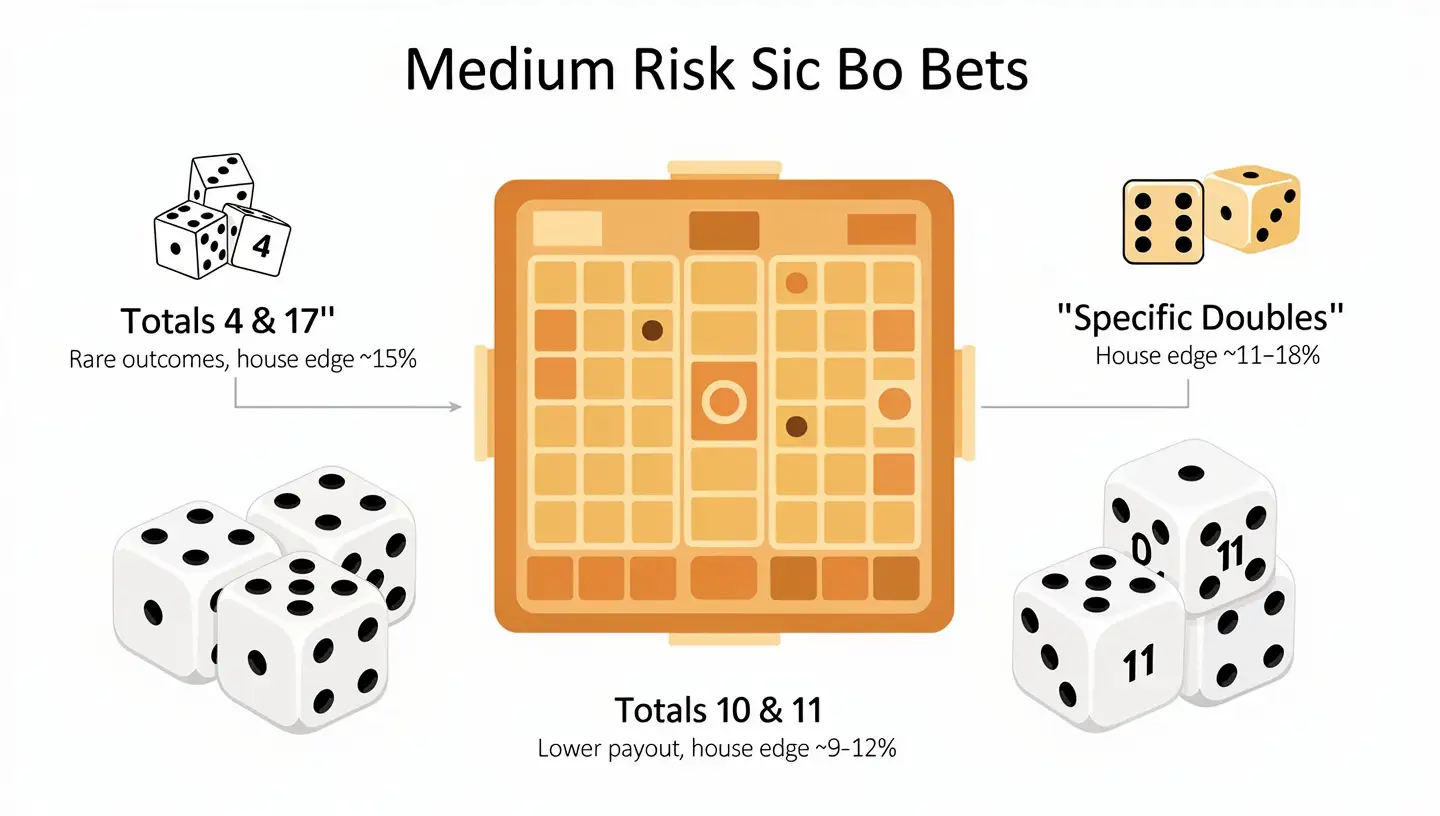
A specific double bet, where two of the three dice must show a matching number you chose in advance, also sits in this middle tier, typically carrying a house edge somewhere around 11 to 18 percent depending on the payout your casino offers. It rewards a bit more patience than Small or Big without venturing into the steepest odds on the table, making it a natural middle step for players who have already gotten comfortable with the basics and want a bit more upside on a winning round.
High Risk Sic Bo Bets
Triple bets occupy the far end of the risk spectrum. An Any Triple bet wins if all three dice match, regardless of the number, typically paying 30 to 1 with a house edge around 13.89 percent. A Specific Triple bet requires all three dice to match one particular number you picked beforehand, and this is where the numbers get genuinely steep, with a house edge that can run anywhere from about 16 percent up to over 30 percent depending on whether your casino pays 180 to 1 or the lower, older standard of 150 to 1 on that same bet at a different table down the street.
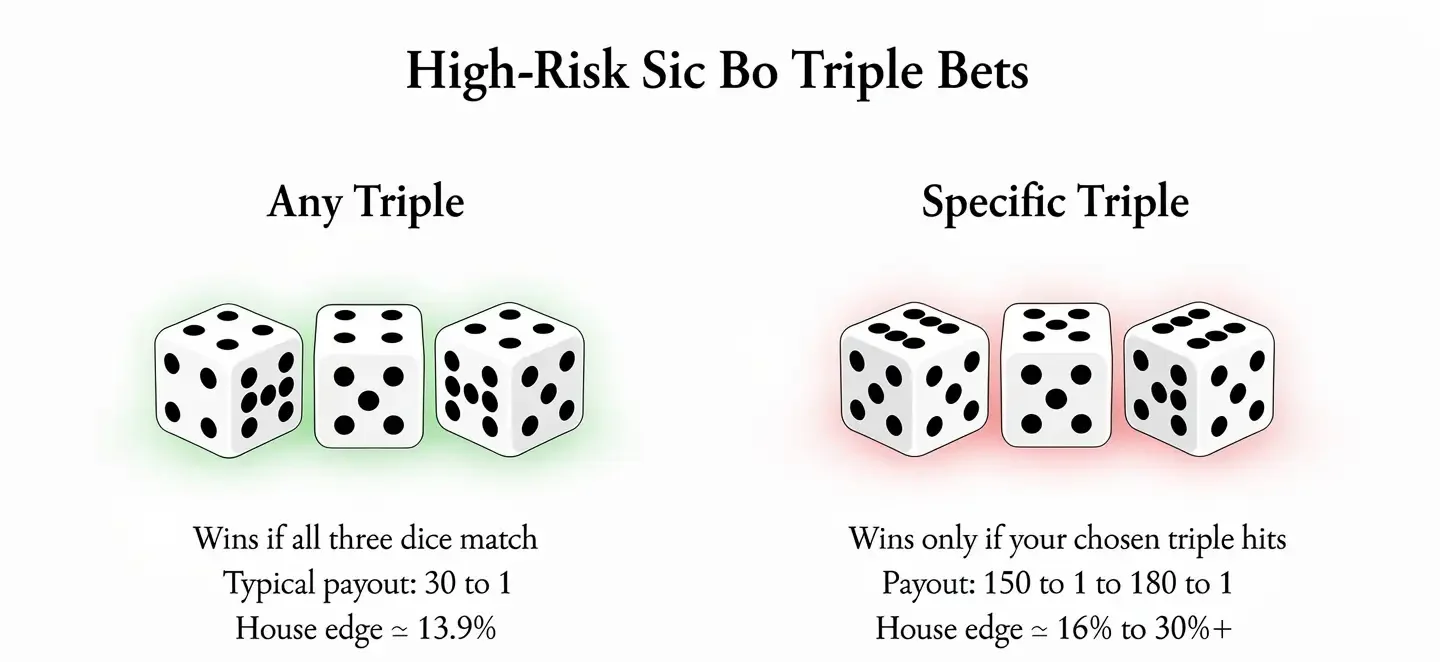
If a big payout on a triple genuinely appeals to you, Any Triple is the smarter version of that bet to place. You give up some of the payout compared to calling a specific number, but your actual odds of winning improve enough to make the trade worthwhile. Betting the smallest denomination available on this tier is worth doing regardless, since the whole point of a bet this unlikely is the occasional large win, not a wager you expect to hit on any given round, and treating it any other way tends to drain a bankroll far faster than players expect going in.
Safest vs Riskiest Sic Bo Bet
Lined up side by side, the gap between the safest and riskiest options on a Sic Bo table is enormous, often wider than almost any other game in the casino. Small, Big, Odd, and Even sit at roughly 2.78 percent, comparable to a single zero roulette bet. Specific Triple, at the other extreme, can run past 30 percent depending on the payout, putting it closer to the worst slot machines you will find anywhere on the floor. Nothing in between changes that spread, which is why most experienced players lean heavily toward the low risk tier and treat everything past Single Number bets as occasional variety rather than a real plan. Seeing the two extremes side by side like this makes it much easier to understand why so many long time players barely glance at the triple section of the table beyond an occasional small wager placed purely for the excitement of chasing a big number every once in a while.
Why Trend Boards Are Not a Strategy
Nearly every Sic Bo table, live or online, displays a small board tracking recent results, sometimes highlighting a number that has not appeared in several rounds as somehow overdue. This board is entertainment, not information. Three dice produce 216 equally likely combinations on every single shake, and none of those shakes carry any memory of the ones before it, no matter how the outcomes line up on the screen in front of you. A streak of five Small results in a row tells you nothing useful about the next round, the same way a run of red numbers on a roulette wheel says nothing about where the ball lands next. Building any part of your betting decisions around that board is building on a pattern that does not actually exist, no matter how tempting the visual trend looks when you glance up at the display between rounds.
Bankroll Management for Sic Bo Betting Strategy
Since triples can wipe out even the safest bets without warning, Sic Bo carries more variance than its simple rules might suggest. A reasonable rule of thumb is to bring at least 60 betting units into a session, a figure that gives your bankroll enough cushion to absorb a normal cold stretch without forcing an early exit. If your standard wager is $5, that works out to roughly $300 set aside specifically for that sitting. This does not guarantee a winning session, but it gives normal variance enough room to even out rather than forcing you to stop the moment a short losing stretch hits, which happens more often than most new players expect given how fast rounds resolve.
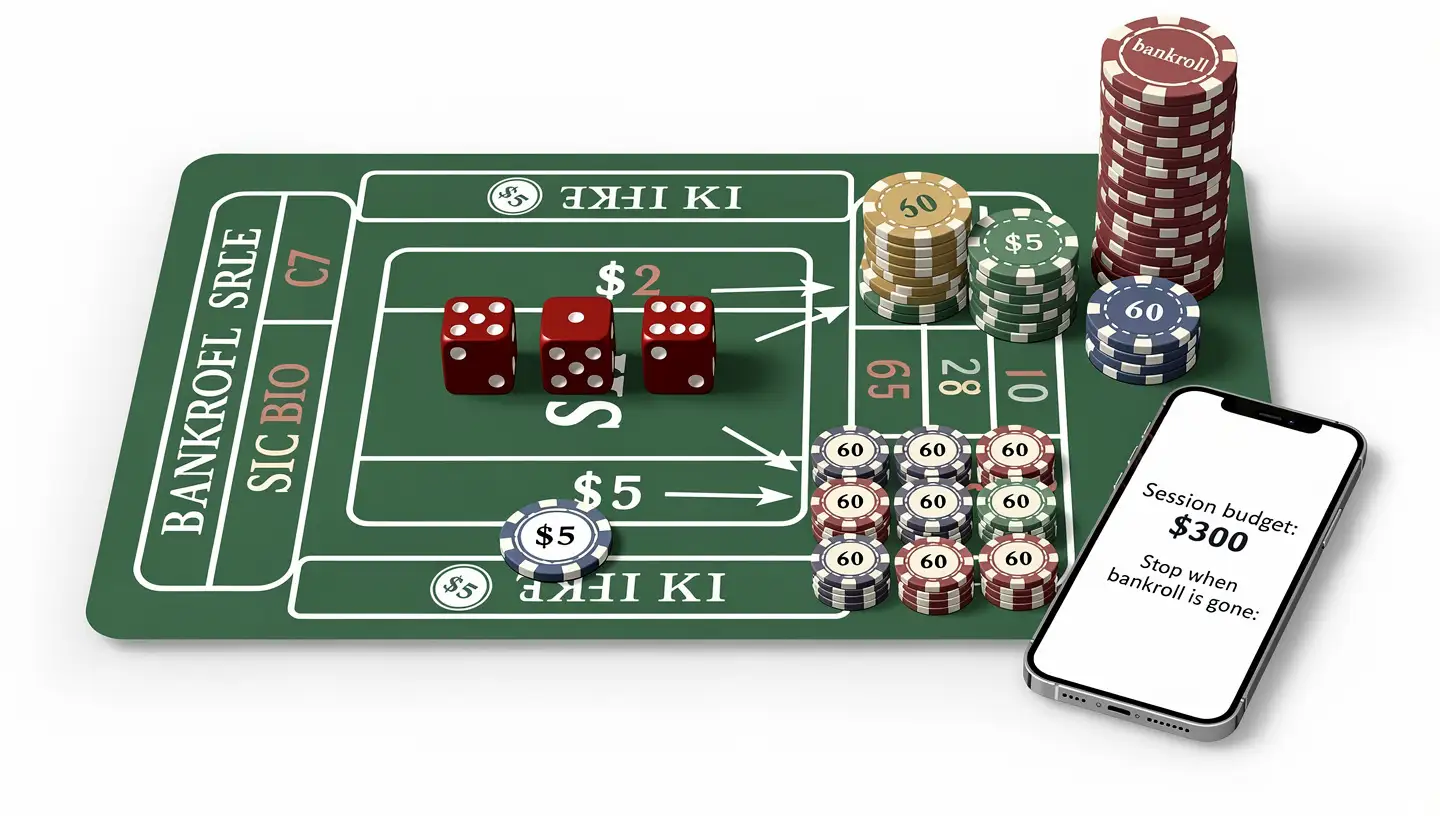
Deciding on that number before you sit down, rather than figuring it out mid session, is the single most useful habit in any sic bo betting strategy worth following. Once that budget is gone, the session is over regardless of how the last few rounds went, and sticking to that rule matters more than which specific bets you chose along the way. Writing the number down somewhere, even just as a quick note on your phone, makes it far easier to actually hold yourself to it once real money and real emotions are involved.
Comparing Paytables Before You Bet
The exact payout for the same bet can differ noticeably from one casino to the next, and that difference changes the house edge more than most players realize. A Specific Triple paying 180 to 1 at one table might only pay 150 to 1 at another, which moves the house edge from roughly 16 percent up toward 30 percent for what looks like an identical bet on paper. The same kind of gap shows up on Two-Dice Combination bets, sometimes paying 5 to 1 and sometimes 6 to 1 depending on the operator. Checking the payout chart printed directly on the table, rather than assuming every Sic Bo game runs the same numbers, is a simple habit that protects you from unknowingly playing a worse version of a bet you already understand.
Our full breakdown of sic bo rules covers the complete house edge table across every standard bet type, which is worth checking against whatever your own casino has posted before you settle into a regular pattern of play. Even a small difference in a single payout figure can shift where a bet sits within these risk categories, so it pays to double check rather than assume every table you sit down at follows the exact same chart.
Super Sic Bo and Multiplier Bets
Some live dealer tables, particularly those built by major software providers, offer a variant called Super Sic Bo, which adds random multipliers to select betting squares before each shake, sometimes reaching as high as 1,000 times the normal payout on a lucky hit. The underlying bet still pays its standard amount, the multiplier is simply layered on top as a bonus feature. You cannot choose which square gets boosted on a given round, and the multiplier is usually revealed only after bets are already placed, which limits how much you can actually plan around it.
Treat this feature as a fun bonus layer rather than something to chase deliberately, since building your entire approach around hoping for a specific multiplier defeats the purpose of a sound sic bo betting strategy built on consistent, understandable odds. The base house edge on each bet stays the same whether or not a multiplier happens to land on it, so nothing about the underlying math actually improves just because the potential payout looks bigger on a given round.
Sic Bo Betting Strategy Tips for Beginners
Choose a casino that clearly displays its rules and payout charts before you ever place a bet, since a site that hides this information is not one worth trusting with real money in the first place. Learn the rules thoroughly rather than assuming every Sic Bo table runs identical terms, since betting minimums, time limits, and specific payouts can all vary quite a bit between live dealer and software driven versions of the exact same underlying game. Start with simple, low risk bets like Small, Big, Odd, or Even while you get comfortable with the pace of the game, then branch out into other categories once you understand exactly what you are risking.
Set a budget before you sit down and treat it as money already spent on entertainment rather than funds you expect to walk away with. None of these habits require any special skill, and together they cover most of what separates a smart session from a costly one, regardless of how many years someone has been playing the game or how confident they sound at the table.
Before you commit real money anywhere, it is worth spending a few minutes checking the operator itself rather than jumping straight to the table. A license alone does not guarantee fair play, but it gives you somewhere to turn if a dispute ever comes up, and it usually means the casino’s games have gone through independent testing before ever reaching the public. Our guide on how to verify a casino license covers exactly what to check before you trust a site, including how to confirm a license number against a regulator’s own public records rather than taking a homepage badge at face value.
If you plan to use a welcome bonus while learning the game, it is worth understanding how those offers actually work before you claim one. Bonus funds almost always come with a wagering requirement attached, and clearing it on a game with a steep house edge, like Specific Triple, can quietly turn a generous looking offer into a much worse deal than it first appeared. Our guide on how wagering requirements work explains how bonus terms can affect your ability to withdraw winnings, which matters just as much at a Sic Bo table as it does anywhere else in the casino. Reading the fine print before you opt into any promotion takes only a couple of minutes and can save a lot of frustration once you are actually trying to cash out.
Payout speed also matters once you are ready to cash out, since a great session at the table means little if the casino behind it takes a week to release your money. Withdrawal times vary a lot between operators and payment methods, and knowing what to expect ahead of time saves you from an unpleasant surprise right after a good run. Our roundup of the best payout online casinos compares operators on that exact point, looking at real withdrawal times rather than marketing claims plastered across a homepage. A fast, reliable payout process is part of what separates a genuinely trustworthy operator from one that only looks good on the surface.
Sic Bo moves fast, often resolving a new round every thirty to sixty seconds, which means a rough stretch can burn through a bankroll far quicker than slower table games allow. Setting a clear stop loss before you sit down matters more here than at almost any other game in the building, since the sheer pace of play leaves very little time to reconsider once a session is already underway and the chips start moving quickly across the felt. Our guide on setting responsible gambling limits covers practical tools for keeping a session in check, whether that means a time limit, a loss limit, or simply the discipline to walk away once your budget runs out.
Frequently Asked Questions
What is the best sic bo betting strategy?
Sticking mostly to Small, Big, Odd, or Even, setting a firm budget before you sit down, and ignoring trend boards covers most of what actually matters at the table. Everything beyond that comes down to personal taste rather than a real mathematical edge, and trying to overcomplicate things with a formal system rarely improves your actual results over time.
What is the safest bet in sic bo?
Small, Big, Odd, and Even all carry a house edge around 2.78 percent, the lowest available on the table. They pay even money and lose only when the dice land on a triple, which happens on a small fraction of overall rounds, keeping your bankroll steadier over the course of a long session than almost any other option available.
Can betting systems like Martingale work in sic bo?
No. Progression systems change how your bankroll moves during a session, but they do not alter the fixed house edge behind any individual bet, since each shake of the dice is completely independent of the last. A losing streak does not make a win any more likely on the very next round, no matter how long that streak happens to run.
Should I bet Any Triple or Specific Triple?
Any Triple is the smarter choice between the two, since it pays less than Specific Triple but wins far more often across a typical session. Specific Triple carries one of the steepest house edges on the entire table, often exceeding 16 to 30 percent depending on the payout offered by a given casino, making it a bet best reserved for very small, occasional wagers.
How much bankroll do I need to play sic bo?
A common guideline is around 60 betting units for a single session. At a $5 base bet, that works out to roughly $300 set aside specifically for that sitting, giving normal variance enough room to play out without forcing an early exit halfway through what should have been a longer session.
Is sic bo strategy different online versus live?
The core principles stay the same in both formats, since the underlying rules and payouts are identical. The main practical difference is pace, with live dealer tables moving slower and sometimes carrying different betting minimums or time limits compared to a software driven game that resolves each round almost instantly, which can change how quickly a given approach plays out over a full session.