At some point after signing up with a new casino, usually right around your first withdrawal, you will likely be asked to upload a photo ID and a recent utility bill or bank statement. This step is called KYC, short for Know Your Customer, and it catches a lot of players off guard simply because nobody explained it to them beforehand.
This guide covers what KYC actually involves, which documents get requested and why, how long the process usually takes, and what to do if something about it feels off. None of it is complicated once you know what to expect, and most players get through it on the first attempt without any real friction.
What is KYC in online casinos
Know Your Customer, or KYC, is the identity verification process licensed casinos use to confirm that you are who you say you are. It exists across nearly every regulated industry that handles money, not just gambling, and it works the same basic way everywhere: you provide official documents, the casino checks them against the details on your account, and once everything matches, your account is marked as verified. Banks, payment apps, and cryptocurrency exchanges all run some version of the same check, so the concept is probably more familiar than it first sounds.
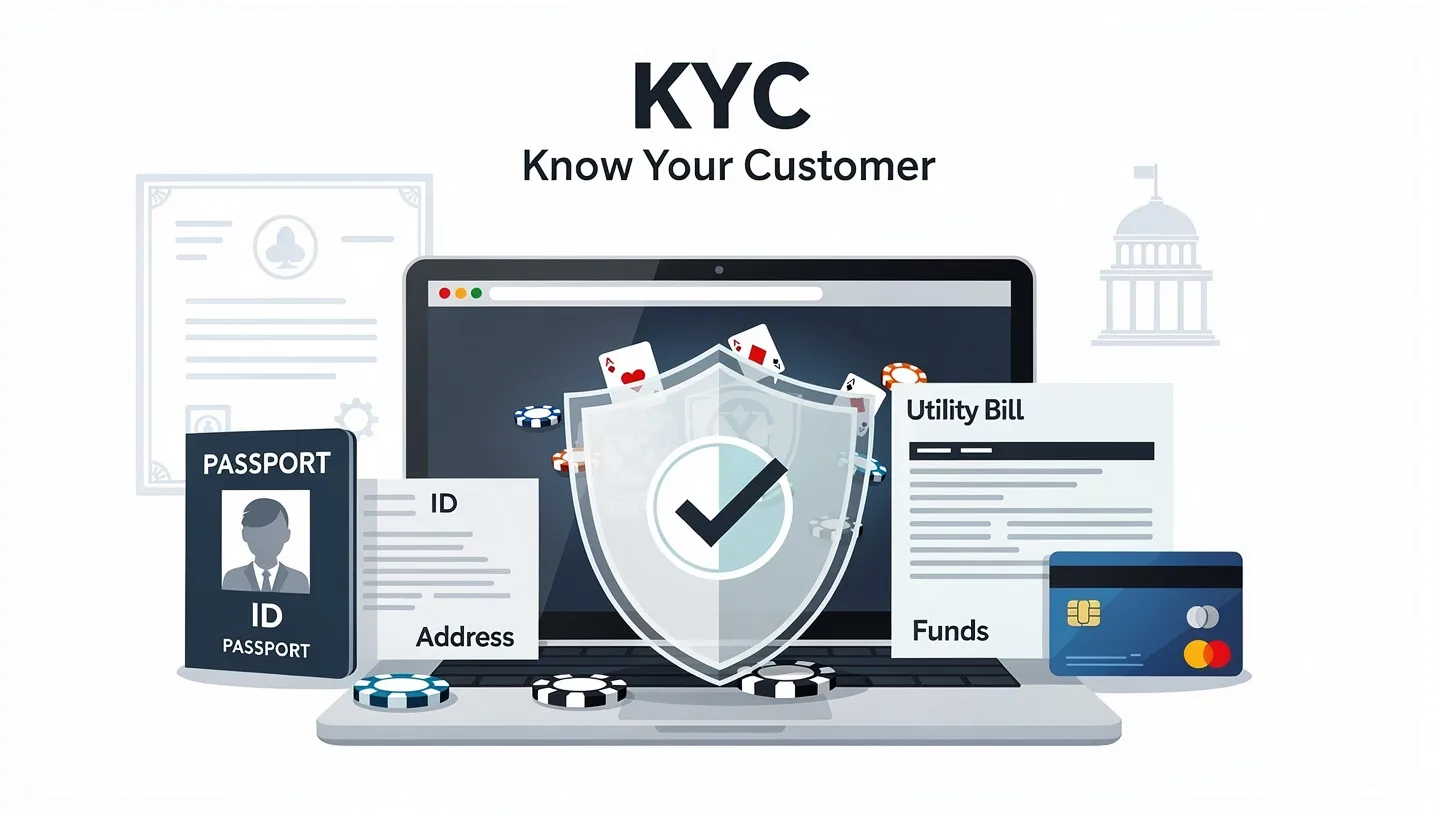
For a casino, KYC is not optional. Regulators require it as a condition of holding a license, which is why you will run into some version of this process at practically every legitimate operator you sign up with. Casinos that skip it entirely, or apply it so loosely that it means nothing, are usually operating without a real license behind them at all. If you have not already confirmed the casino itself is worth your time, our guide on how to spot a reputable online casino is worth reading before you get to this stage, since a solid KYC process is itself one of the signs a casino takes compliance seriously.
Why casinos require KYC verification
A few different goals sit behind this requirement, and they overlap more than most players realise. None of them exist purely to slow you down or make signing up harder than it needs to be, even though it can feel that way the first time you run into it partway through what should be a simple withdrawal.
Regulatory compliance comes first. Licensed casinos are legally required to verify player identities as part of anti-money laundering rules, and skipping this step can cost an operator its license entirely. This is not a policy any individual casino chose on its own. It comes directly from whichever regulator issued the license in the first place, and the exact requirements can shift depending on which one that is.
Fraud prevention is the practical side of the same coin. Stolen card details, fake identities, and duplicate accounts created to abuse welcome bonuses are all things KYC is specifically designed to catch before real money changes hands. A casino that skips this step is effectively leaving the door open to exactly this kind of abuse, which ends up costing honest players too through tighter bonus terms and slower processing across the board. Fraud losses at any business eventually get passed down to customers in one form or another, and gambling is no exception to that pattern.
Underage gambling prevention relies on the same identity checks. Confirming a player’s date of birth against an official document is the most reliable way a casino has of keeping minors off its platform, since a simple checkbox at signup does nothing to actually stop someone determined to lie about their age. Regulators treat this particular requirement extremely seriously, and failures here tend to draw the harshest penalties of any compliance failure a casino can commit.
Protecting your own funds rounds out the list. KYC confirms that withdrawals go to the actual account holder, not to someone who gained access to your login details, which matters just as much for you as it does for the casino. Think of it as a second lock on the door, one that specifically protects the money rather than just the account itself, and one that works even if your password has already been compromised somewhere else.
What documents you will need to provide
Requirements vary slightly between operators, but most licensed casinos ask for some combination of the following, usually gathered into a single upload session rather than spread across multiple separate requests.
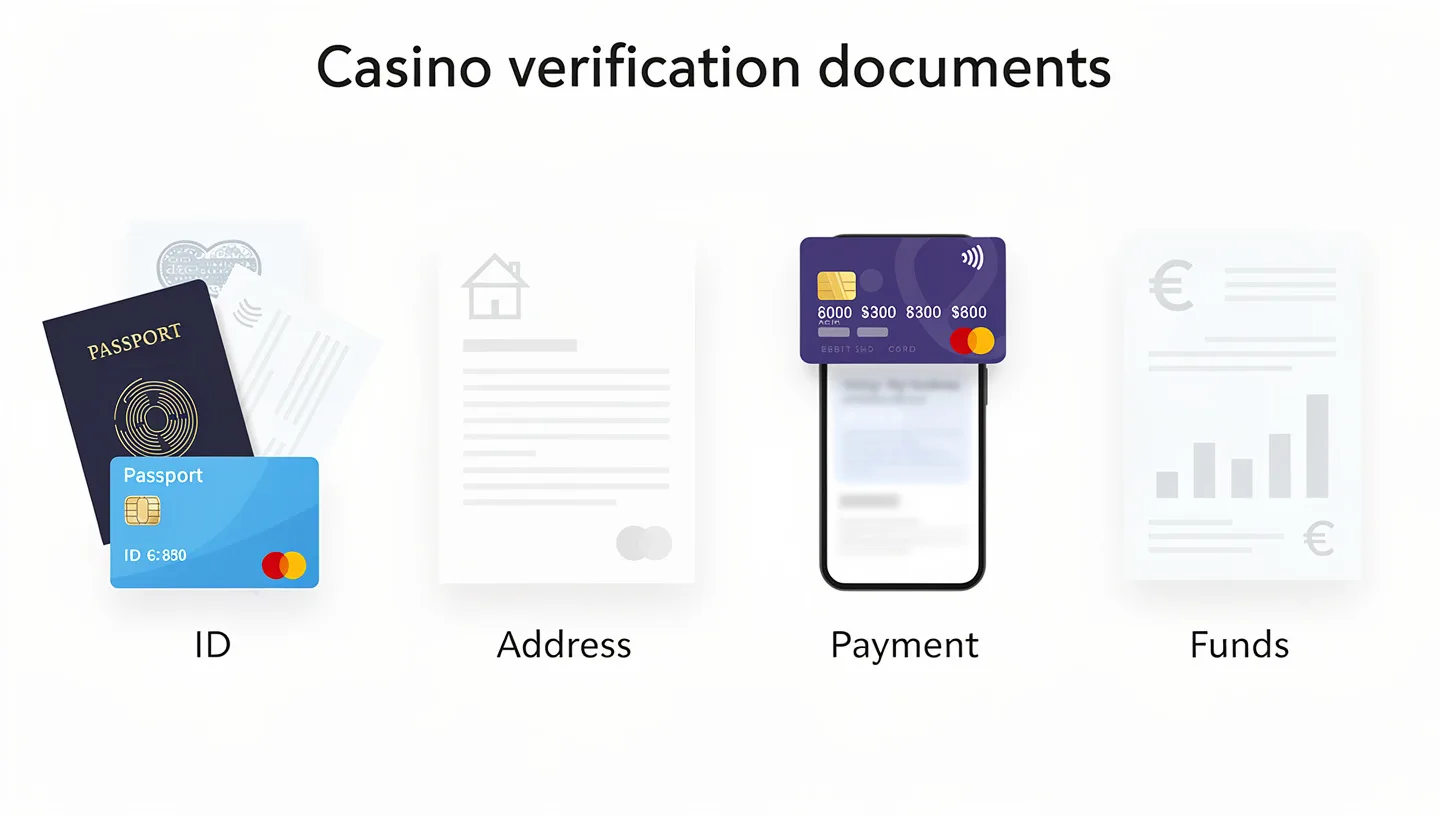
| Document type | Common examples |
|---|---|
| Proof of identity | Passport, national ID card, driving license |
| Proof of address | Utility bill, bank statement, government letter, dated within the last three months |
| Payment method ownership | Photo of your card showing the last four digits, or a screenshot of your e-wallet |
| Source of funds | Payslip, tax return, or bank statement, usually only requested for large transactions |
Proof of identity
This confirms your name, date of birth, and that the document itself is genuine and issued by a real government authority. A clear photo showing all four corners of the document, with no glare or cropped edges, is usually enough to pass this check on the first attempt. Expired documents are a common reason for rejection, so it is worth glancing at the expiry date before you upload anything, since resubmitting after a rejection always takes longer than getting it right the first time around.
Proof of address
Casinos want to see something recent, generally issued within the last ninety days, that shows your name and current address together clearly on one single document. A utility bill or bank statement covers this in almost every case. Documents addressed to a family member rather than you directly, even if you live at the same address, typically will not be accepted, since the whole point of this check is confirming that the address belongs specifically to you.
Payment method ownership
Since withdrawals typically return funds to the same method you deposited with, casinos need proof that the account or card actually belongs to you. This usually means a photo with the middle digits of a card blacked out, or a simple screenshot of an e-wallet account showing your name. Never send a full, unmasked card image to any casino, since a legitimate operator only ever needs to see enough digits to confirm the card is yours, not the complete number.
Source of funds
This one only comes up for larger deposits or withdrawals, or when spending patterns look unusual for the account. It is called enhanced due diligence, and it exists to confirm the money you are gambling with was earned or obtained legitimately, rather than being a sign that the casino suspects you specifically of anything. Most casual players never encounter this stage at all, since it is reserved for accounts well above typical spending levels.
When casinos ask for KYC
Verification does not always happen at the same point, and when it gets triggered often depends on the operator and the regulator behind it. Knowing these triggers in advance means you are never caught off guard mid session by a sudden request for documents.
- Right after registration, before you are even allowed to deposit or play at all, which some stricter regulators require outright regardless of how small your first deposit might be
- Before your first withdrawal, which is the single most common trigger across the industry
- When you reach a certain deposit or withdrawal threshold, even on an account that was previously fully verified under a lower spending tier entirely
- After you add a new payment method to your account
- If the casino’s fraud systems flag unusual activity, such as a new device, an unfamiliar location, or a sudden change in typical betting patterns
- Periodically, as part of scheduled compliance reviews required by some regulators even on accounts that were verified years earlier
Getting it done early, right after you sign up rather than waiting for a withdrawal to force the issue, is the easiest way to avoid a delay later. Our page on casino withdrawal times explains how a completed KYC check fits into the overall payout timeline, since verification status is usually the single biggest factor in how fast a payout actually clears, more so than the payment method itself in most cases.
How long KYC verification takes
Timelines vary, but a few general ranges hold true across most licensed operators, regardless of which specific casino you happen to be playing at.
| Stage | Typical time |
|---|---|
| Initial document review | 24 to 72 hours |
| Additional checks after a mismatch or unclear document | 5 to 7 days |
| Withdrawal specific approval | 24 to 48 hours |
| Enhanced due diligence for large accounts | 1 to 2 weeks |
A first time review usually falls on the faster end of these ranges. Delays almost always trace back to something specific, like a blurry photo or a name that does not quite match across documents, rather than the process itself being slow by design. It helps to remember that a human being is often reviewing these documents on the other end, not an automated system working instantly around the clock, which is also why submitting during off hours can occasionally add a little extra waiting time.
Step by step: how to complete KYC
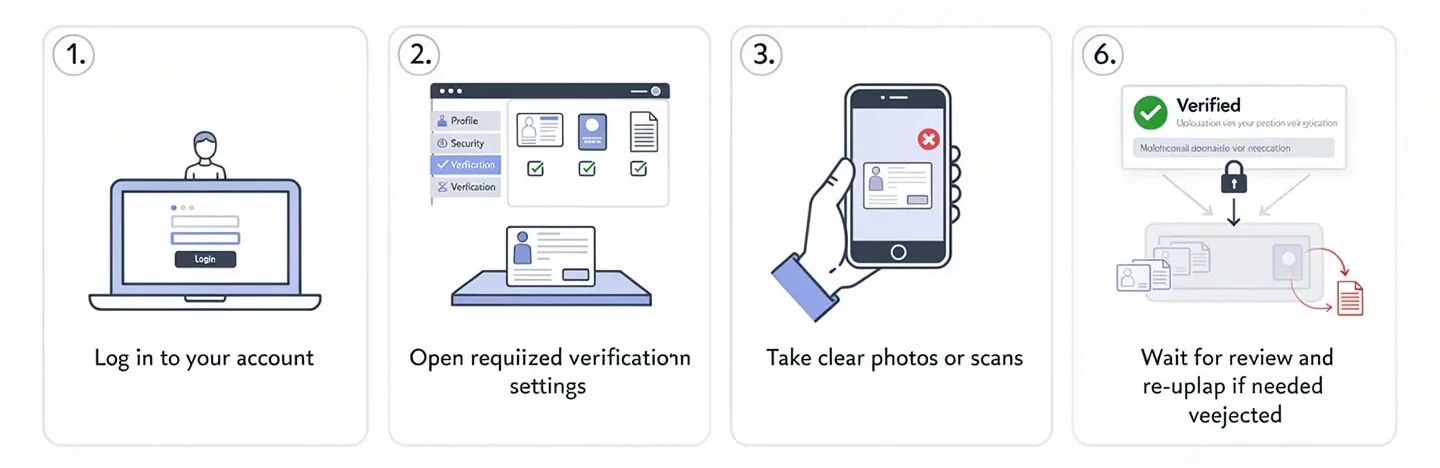
- Log into your account and open the verification or account settings section, usually found under a tab labelled Profile, Security, or Verification
- Check exactly which documents the casino is requesting, since this can vary slightly by operator and sometimes by which country your account is registered in
- Photograph or scan each document in good lighting, with all text clearly readable and no part of the document cut off from view
- Upload the files through the casino’s secure portal rather than emailing them separately
- Wait for confirmation, which usually arrives by email or as a status update in your account
If a document gets rejected, the casino should tell you why. Reupload the corrected version rather than submitting the same file again and hoping for a different result, since resubmitting an identical rejected document just restarts the same review clock without fixing whatever the actual issue was in the first place.
Once verification is complete and you are ready to actually withdraw, our guide on how to withdraw casino winnings walks through the rest of the process, which is usually far simpler than the identity check that comes before it, since most of the friction in a first withdrawal comes from KYC rather than the payout itself.
Tips to avoid KYC delays
- Make sure the name and address on your account exactly match what appears on your documents, since small mismatches are the most common cause of delays and are also the easiest thing to check before you even start uploading anything
- Submit clear, well lit photos rather than blurry screenshots of screenshots or heavily cropped images that cut off part of the document entirely
- Use a payment method that is actually registered directly in your own name, not a card or account belonging to a partner, family member, or friend
- Complete verification shortly after signing up instead of waiting until you actually want to withdraw your hard earned winnings
- Respond quickly if the casino asks for anything additional, since a slow reply on your end just adds to the wait for a payout you are otherwise ready to receive
None of these take more than a few extra minutes, and together they cover the large majority of reasons verification ends up taking longer than it should. A little bit of care on your end at the upload stage almost always saves far more time than it costs, since a rejected document typically adds days rather than minutes to the overall process.
Once your identity is confirmed, it is also worth setting up basic account protections while you are already in the settings menu, and our guide on responsible gambling limits covers how to do that in a couple of minutes, right around the same time you complete verification rather than as a separate task for later.
How KYC requirements differ by regulator
Not every regulator applies the same level of scrutiny, and that difference shows up directly in how strict the KYC process feels as a player from the very first deposit onward. Operators licensed by the UK Gambling Commission generally verify identity before any deposit or play is allowed at all, alongside mandatory source of funds checks once spending crosses certain thresholds.
Curaçao’s framework has tightened noticeably since a major reform in 2024, though it still generally applies lighter ongoing scrutiny than the UKGC. If you want the full picture of what changed, our breakdown of the Curaçao gambling license covers the reform in detail, including exactly what identity verification rules changed as part of it. That reform is a useful reference point even if you never plan to play at a Curaçao licensed site, since it shows how quickly KYC standards can shift when a regulator decides to tighten its rules. It also clearly demonstrates that offshore licensing is not automatically stuck in place forever, and can genuinely improve substantially over time under enough sustained pressure from players, journalists, and industry watchdogs working together to push for better standards across the board.
Since KYC intensity tracks fairly closely with how strict a regulator is overall, understanding casino license types gives you a good sense of what to expect from the verification process before you even sign up anywhere, rather than being surprised by it later once real money and real documents are already involved in the situation.
No-KYC casinos explained
Some operators market themselves specifically as no-KYC or low-verification casinos, usually built around crypto payments that bypass the identity checks tied to traditional banking. The appeal is obvious: faster registration, quicker withdrawals, and none of the document upload back and forth described above. For some players this genuinely fits how they want to gamble, particularly for smaller, casual amounts where speed matters more than anything else, and where the trade offs described below feel worth accepting.
The trade off is real too. Fewer identity checks generally mean less protection if something goes wrong with a payment, and weaker verification standards often line up with lighter licensing overall. This is worth weighing carefully rather than assuming faster is automatically better, especially if you are planning to deposit anything beyond a small, casual amount you would not mind losing outright. A dispute with a no-KYC operator can be considerably harder to resolve, simply because there is less of a paper trail connecting the account to you in the first place.
Common KYC terms glossary
A handful of acronyms show up constantly in this space, and it helps to know what they actually stand for rather than nodding along when a support agent uses one mid conversation.
| Term | Meaning |
|---|---|
| KYC | Know Your Customer |
| AML | Anti-money laundering |
| POI | Proof of identity |
| POA | Proof of address |
| SoF | Source of funds |
| EDD | Enhanced due diligence |
| PEP | Politically exposed person, a higher risk category some checks screen for |
Verifying your identity is a normal part of playing at any licensed casino, and it protects your money just as much as it protects the operator. Once it is out of the way, it rarely needs repeating unless you change payment methods or your account details change significantly. Most players who go through it once describe it as a minor speed bump rather than any kind of real obstacle, especially compared to how much smoother later withdrawals become once it is behind them. Treating it as a routine part of signing up, rather than something unusual or suspicious, makes the whole experience far less stressful.
The same checks apply on the sports betting side too, and our guide on choosing a reputable bookmaker covers what to look for there specifically, including how verification standards tend to line up with the same licensing tiers covered earlier in this guide. Whether you end up spending most of your time on casino games or sports betting, the underlying identity check works the same way and exists for the same basic reasons.
Frequently asked questions
What happens if I fail KYC verification?
The casino will usually tell you what was wrong and give you a chance to resubmit corrected documents. If verification cannot be completed at all, the account may be restricted and any pending withdrawal paused until the issue is resolved, though this is uncommon when players simply provide clear, matching documents in the first attempt without cutting corners.
Can I play before completing KYC?
At many casinos, yes, though this depends heavily on the regulator involved. Some jurisdictions require identity verification before any deposit or play, while others only enforce it before a withdrawal, so it is worth checking a specific casino’s own stated policy rather than assuming one single approach applies everywhere across the board.
Are my documents safe with the casino?
Licensed operators are required to store identity documents securely and use them only for verification purposes as intended. Reputable casinos encrypt uploads and limit internal access carefully, though it is always worth confirming a casino is properly licensed before submitting anything sensitive, since that license is ultimately what makes these obligations legally enforceable in the first place.
Why do casinos ask for KYC again after I already verified?
This usually happens after you add a new payment method, reach a higher deposit threshold, or if your account details change in some meaningful way. Some regulators also require periodic reviews even on long verified accounts, so a repeat request does not necessarily mean anything went wrong on your end at all.
Is KYC the same at every casino?
The core documents are similar everywhere, but the strictness and timing vary by regulator quite noticeably. A UKGC licensed operator generally verifies noticeably earlier and more thoroughly than a lighter offshore license would require, though the underlying goal here, confirming who you are before real money moves, stays exactly the same regardless of which regulator is involved in any given case.